Quad leaders meet in Manila a day before Trump sits down with Xi in Shenzhen
The first Quad summit of Trump's second term is expected to stress minerals, maritime security and economic resilience, but its sequencing alongside the Xi meeting limits how hard it can press Beijing.
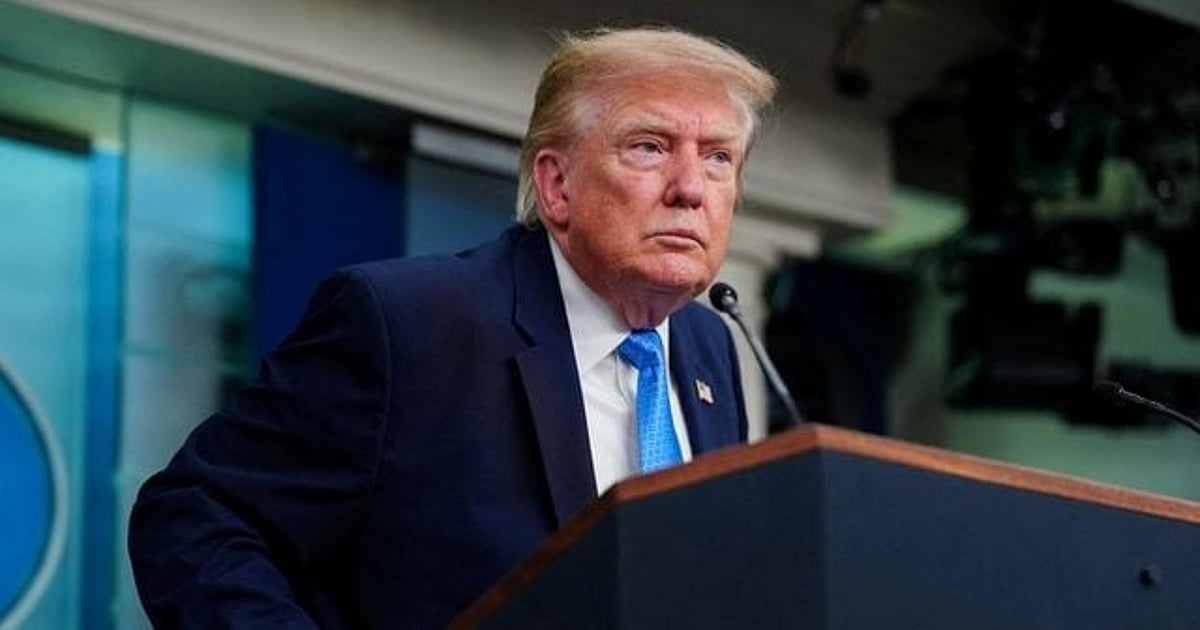
Leaders of the Quad are due to meet in Manila on Tuesday for the grouping's fifth in-person summit, with President Donald Trump attending for the first time since returning to office in January 2025. Prime Minister Narendra Modi, Australian Prime Minister Anthony Albanese and Japanese Prime Minister Sanae Takaichi will join him. The meeting comes a day before Trump's scheduled talks with Chinese President Xi Jinping in Shenzhen.
That sequencing shapes expectations. Trump flies from the Philippine capital to southeastern China for the 33rd APEC Economic Leaders' Meeting, where he is due to hold bilateral talks with Xi, followed by a trilateral session with Russian President Vladimir Putin on Thursday. A forceful collective statement aimed at Beijing on the eve of those encounters would sit awkwardly with a president who has favoured direct engagement and trade bargains over sustained strategic competition.
The likely outcome is therefore continuity rather than escalation. Leaders are expected to emphasise cooperation on critical minerals, maritime security and economic resilience, and to reiterate the importance of freedom of navigation, the UN Convention on the Law of the Sea and the 2016 arbitral tribunal award that rejected the legal basis of China's expansive historic-rights claims in the South China Sea. Restating established positions, however, is not the same as imposing new costs or setting out a fresh collective posture.
Manila carries symbolic weight for the bloc. The city was where the four-nation format first took shape in 2007 and where it was revived in 2017. The grouping was elevated to leaders' level with a virtual meeting in March 2021. Modi will also be in the Philippine capital for the India-ASEAN Summit and the East Asia Summit, hosted by President Ferdinand Marcos Jr.
For New Delhi the summit carries an added edge. India had planned to host the leaders' meeting last year, and Modi invited Trump to attend when the two met in Washington in February 2025. That gathering never materialised. Relations have been strained by US tariffs, pressure on India to cut Russian energy imports, Trump's warm engagement with Pakistan's civilian and military leadership, and what Indian officials see as Washington's inadequate condemnation of cross-border terrorism. Foreign ministers, including Secretary of State Marco Rubio and External Affairs Minister S Jaishankar, continued to meet, but a leaders' summit stalled.
The broader question is whether the US treats the Quad as an instrument of pressure on China or as reassurance for partners wary of a Washington-Beijing accommodation. Concern in New Delhi that American priorities may shift at the expense of regional balance gives Tuesday's meeting significance beyond its communique. Its value may lie less in what it says to Beijing than in what it signals to allies about the durability of US commitment in the Indo-Pacific.