Nitin Nabin invokes Jana Sangh's Goa and Bengal record to rally BJP workers
Speaking at a party event, the BJP president framed the organisation's 75-year-old origins as a template of resolve for today's cadre.
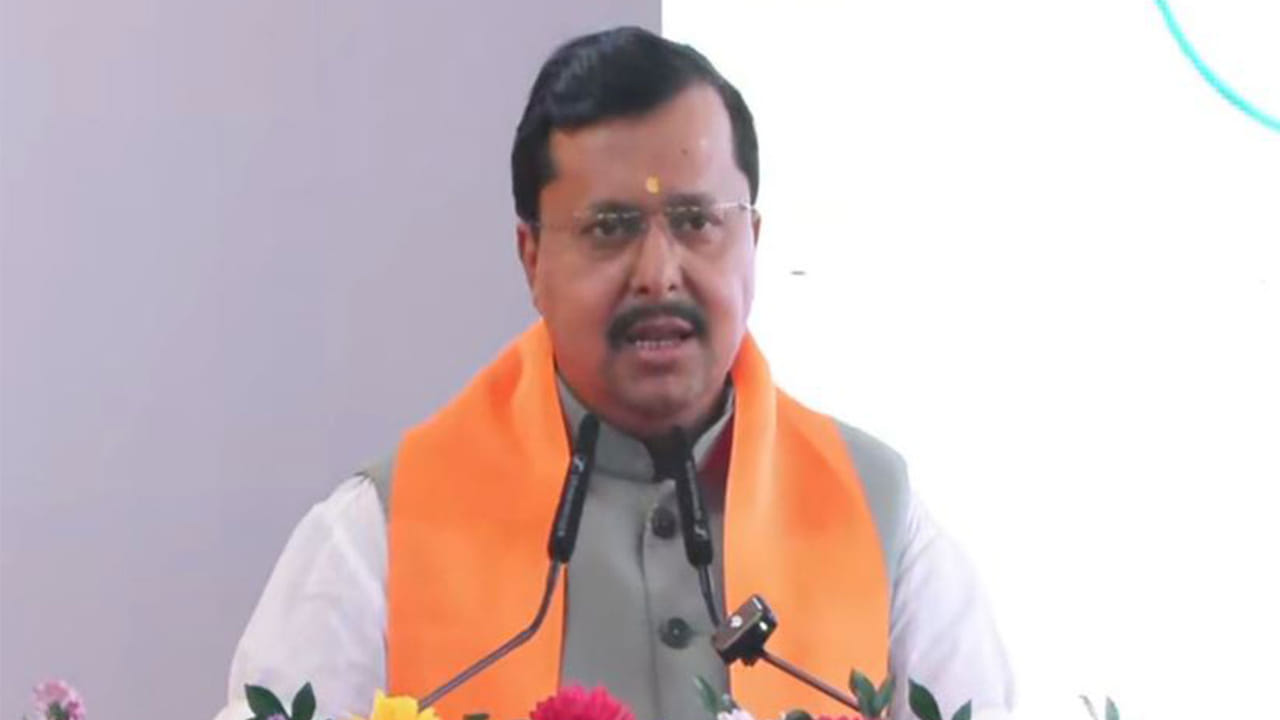
BJP National President Nitin Nabin on Wednesday paid tribute to members of the Bharatiya Jana Sangh, crediting them with advancing the 'Ek Bharat, Shreshtha Bharat' idea in the cases of Goa's integration and the partition-era question in West Bengal. Addressing a party gathering, he urged present-day workers to carry the same resolve towards making India a "Vishwa Guru".
Nabin said the Jana Sangh kept alive the vision of a unified country first articulated by Syama Prasad Mukherjee, even after Mukherjee's death. He said Jana Sangh members opposed the 1961 integration of Goa's fate being left unresolved, and resisted plans to merge Hindu-majority parts of Bengal with what was then East Pakistan, now Bangladesh. These are his characterisations, and the speech did not set out specifics.
The historical record adds some nuance. Mukherjee led the campaign for a separate Hindu-majority West Bengal in 1946-47, when he was associated with the Hindu Mahasabha. The Jana Sangh was founded only on October 21, 1951, and Mukherjee died in 1953. Nabin's Bengal reference therefore appears to fold the pre-1951 movement and the party's later ideological inheritance into a single lineage, a common move in political memory-making. Goa's liberation came in December 1961 through Indian military action, and the Jana Sangh had earlier taken part in agitation over the territory.
The speech was as much about the present as the past. Nabin noted that the organisation began 75 years ago with no funds, not even to print receipts, and with no office or transport, but with a determination to take its ideology to every person. He contrasted that with the favourable conditions in which today's workers operate, and called it their duty to use them to strengthen the party.
He also praised the Delhi unit's slogan 'Jan Sangh se Jan-Jan ki Yatra', and tied the founders' goals to Prime Minister Narendra Modi's call to connect every citizen with the country's development. Independence, he argued, was meant to lead to a democracy that reaches the last person, strengthens cultural roots and makes the nation self-respecting.
The message fits a familiar pattern in BJP organisational messaging: anchoring current governance goals in the Jana Sangh's founding narrative, and presenting the party's growth from a marginal formation to a dominant one as both inheritance and obligation. With the 75th anniversary of the Jana Sangh's founding approaching, such references are likely to recur in party events.